


Call Us
+86-15957735002
Email Us
gaohang@yagect.com

Are Modern Cable Ties Reshaping Global Industrial Fastening Standards?
This industry news feature examines the transformation of fastening solutions across multiple sectors. Engineers and logistics professionals now expect higher durability, adaptability, and consistency from everyday binding products. The shift began more than a decade ago, when production volumes increased and quality standards became stricter. One product that experienced this evolution is the cable ties, which moved from a simple organizing tool to a critical component in automotive, aerospace, construction, and data center management. This article explores manufacturing advances, material innovations, application-specific designs, and the role of experienced production facilities that have shaped the global supply landscape without relying on intermediary terminology or numeric overload.
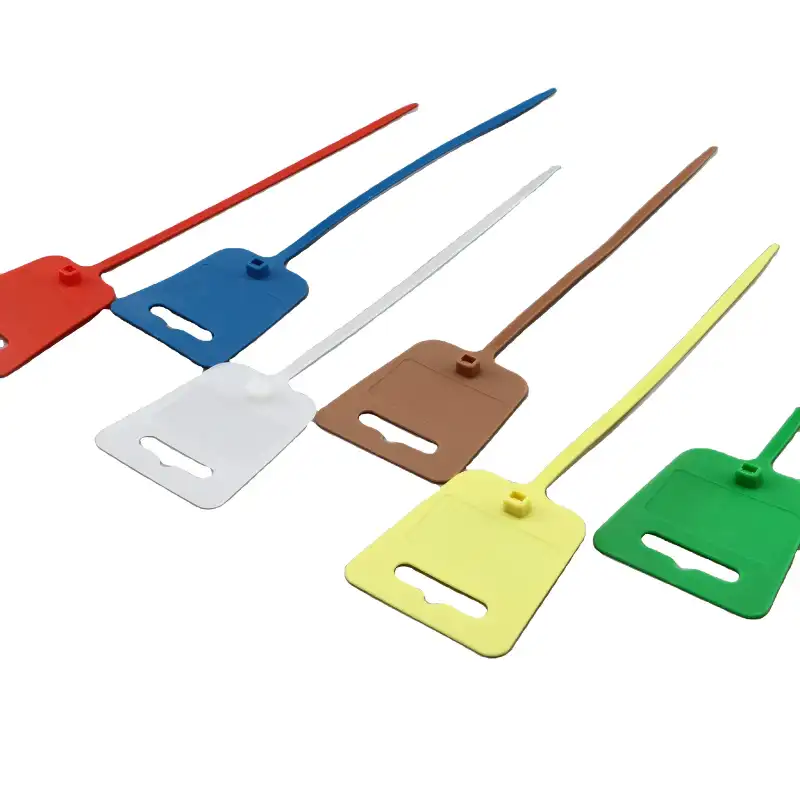
Historical Context And The Rise Of Engineered Fastening
Originally introduced as a nylon strip with a ratchet mechanism, the cable ties gained popularity for its low cost and ease of use. Over the years, industries demanded higher tensile strength, UV resistance, flame-retardant grades, and stainless steel locking versions. The market responded with specialized variants: weather-resistant ties for outdoor electrical installations, plenum-rated ties for air handling spaces, and releasable types for temporary bundling. Manufacturing facilities expanded their capabilities, moving from manual assembly lines to fully automated injection molding cells. This transition required substantial investment in precision molds, temperature-controlled workcells, and real‑time quality monitoring. Factories that adopted such technologies early gained the ability to serve export destinations across multiple continents, from North American infrastructure projects to Southeast Asian electronics assembly hubs.
Automation As A Game Changer
Modern production environments rely on closed-loop injection molding systems. Each cycle produces consistent locking mechanisms and tensile strength. Advanced robots extract finished components and place them into packaging lines without human contact. This reduces contamination risks and improves output stability. Furthermore, automated vision systems inspect every individual unit for surface defects, gate vestiges, and pawl alignment. Reject rates have dropped significantly compared to manual sorting methods. Facilities that integrate such automation can maintain tighter tolerances on head width, strap thickness, and tooth profile. These parameters directly affect the holding force and reusability of each fastening device.
Material Science Breakthroughs
Polyamide formulations now include heat-stabilized, UV-stabilized, and hydrolysis-resistant grades. Glass-fiber reinforced versions provide higher tensile strength for heavy-duty bundling. Halogen-free flame-retardant materials meet stringent safety regulations for rolling stock and aircraft interiors. Biobased nylon compounds reduce carbon footprint without sacrificing mechanical performance. Each material family requires specific drying protocols, melt temperatures, and mold cooling profiles. Manufacturers with dedicated material testing laboratories can switch between grades rapidly, responding to custom engineering requests. This flexibility has enabled just‑in‑time supply for large infrastructure projects, such as subway signaling retrofits and solar farm cable management.
Global Supply Chain Demands And Export Consistency
Exporting to diverse climatic regions imposes additional requirements. Shipments to humid tropical zones need anti‑humidity packaging to prevent nylon from absorbing moisture before installation. Consignments destined for arid deserts require UV‑stabilized products to avoid brittleness. Cold‑climate applications benefit from impact‑modified compounds that remain flexible at subzero temperatures. A competent manufacturer must validate each batch through accelerated aging tests, salt spray corrosion tests, and dielectric strength measurements. Documentation packages often include material safety data sheets, declaration of conformity with RoHS and REACH, and lot‑traceable certificates of analysis. These deliverables enable smooth customs clearance and specification verification by quality assurance teams abroad.
Case Example: Infrastructure Projects Across Multiple Continents
In North America, telecom tower upgrades frequently require plenum‑rated fasteners with low smoke emission. South American mining operations demand heavy‑duty ties that resist abrasion against rock surfaces. African renewable energy sites need UV‑stabilized black nylon with prolonged outdoor life. Australian marine environments favor stainless steel locking versions to withstand saltwater corrosion. Japanese electronics assembly lines use antistatic ties that prevent electrostatic discharge damage. Middle Eastern oil refineries specify high‑temperature ties capable of withstanding pipeline surface heat. Southeast Asian data centers call for low‑halogen, low‑smoke ties that maintain fire safety ratings. A single qualified factory can produce all these variants by maintaining a portfolio of specialized molds and approved material recipes. This capability reduces lead times and minimizes logistical complexity for large contractors operating worldwide.
Quality Assurance Frameworks Without Reliance On Costly Field Failures
Repetitive field failures damage brand reputation more than initial production savings. Therefore, leading manufacturing operations implement statistical process control throughout the molding cycle. Real‑time sensors monitor injection pressure, holding pressure, cooling time, and cavity temperature. Automated data logging triggers corrective actions when any parameter drifts beyond control limits. Destructive testing labs perform pull‑force verification every shift, using calibrated universal testing machines. Environmental chambers simulate extreme temperature and humidity cycles to validate long‑term reliability. Ultrasonic inspection detects internal voids or delamination in thick sections. All these measures ensure that every shipping carton contains fully functional fasteners that meet or exceed industry standards such as UL, CSA, and DNV. Proper testing protocols directly influence the reliability of each cable ties leaving the factory floor.
Traceability And Lot Segregation
Modern facilities assign a unique batch code to each production run. Laser markers or inkjet printers apply codes directly onto the strap surface or packaging label. Warehouses segregate lots by date, material type, and molding machine number. In case of a customer complaint, the manufacturer can isolate the affected batch within hours and perform root cause analysis using historical process data. This traceability system also helps manage recalls efficiently. Moreover, it supports continuous improvement by correlating raw material lot numbers with finished product performance. Clients receive traceability reports upon request, demonstrating transparency and accountability—qualities highly valued in aerospace, defense, and medical device packaging.
Sector‑Specific Applications And Design Customization
Different industries prioritize different attributes. Automotive harness assembly demands flexible ties that do not damage wire insulation during high‑speed robot winding. Construction contractors need extra‑long ties for rebar positioning and formwork scaffolding. Agriculture uses UV‑resistant ties for trellising vines and securing greenhouse films. Retail packaging requires colorful, printable ties with customized logo embossing. The following table illustrates how application environments influence design parameters.
| Industry Sector | Critical Requirement | Typical Material/Design |
|---|---|---|
| Aerospace | Flame retardancy, low outgassing | Halogen-free polyamide, curved tip |
| Telecommunications | UV resistance, wide operating temperature | Weather‑stabilized black nylon, stainless steel locking |
| Food Processing | Metal detectable, washdown compatible | Blue polyamide with metal additive, smooth edges |
| Renewable Energy | Long outdoor life, vibration resistance | UV‑stabilized heavy‑cross‑section design |
| Data Centers | Low smoke, halogen‑free, tool‑free release | Releasable head, flame‑retardant rating V‑0 |
Each row represents a distinct engineering challenge. Manufacturers that offer customization can adjust head geometry, tail shape, and locking mechanism. For example, a curved tip reduces snagging during wire loom installation. A thin profile allows threading through narrow cable trays. A wide head distributes clamping force evenly, preventing insulation crush. These subtle modifications differentiate a commodity product from an engineered solution. Consequently, brand owners prefer suppliers with in‑house tooling capabilities and rapid prototyping services. Turnaround times for custom molds have shortened with the adoption of high‑speed CNC machining and electrical discharge machining centers.
Sustainability Initiatives In Fastener Production
Environmental regulations and corporate sustainability goals push manufacturers to reduce waste. Injection molding inherently generates runner waste, but advanced hot runner systems eliminate cold runners entirely, reducing plastic scrap. Regrind loops reprocess internal waste into non‑critical components without degrading final product quality. Furthermore, some factories use renewable energy sources for production lines and warehouse lighting. Packaging materials increasingly consist of recycled cardboard and biodegradable polybags. Water recycling systems cool molds without discharging contaminated water. These measures lower the carbon footprint of each thousand fasteners produced. Clients can request environmental product declarations that quantify global warming potential, water usage, and end‑of‑life recyclability. Such transparency builds trust with environmentally conscious procurement departments.
End‑Of‑Life Considerations
Conventional nylon ties are not easily biodegradable, but new compound families incorporate organic additives that promote degradation in active landfills. Another approach involves using polyamide grades that can be mechanically recycled when separated from other plastics. However, the small size of most ties makes separation difficult in mixed waste streams. Therefore, some manufacturers offer ties with contrasting colors or magnetic additives to facilitate sorting. In controlled environments like data centers, reusable ties with quick‑release levers reduce waste generation. Designers also explore monomaterial fastening systems where the tie and locking pawl are made from identical polymer families, easing chemical recycling. These innovations keep the industry aligned with circular economy principles.
Training And Workforce Competence In Modern Factories
Advanced machinery requires skilled operators who understand polymer rheology, mold maintenance, and quality statistics. Many production sites partner with technical colleges to offer apprenticeship programs. Workforce competence directly influences machine uptime, defect rates, and troubleshooting speed. Regular training sessions cover new material handling procedures, safety protocols, and lean manufacturing tools such as 5S and Kaizen. Cross‑functional teams include tooling engineers, material scientists, and logistics coordinators who work together on continuous improvement projects. This integrated approach reduces communication gaps between design and production floors. As a result, factories can introduce new tie variants faster while maintaining consistent quality.
Knowledge Transfer For Export Documentation
Shipping goods to twenty different markets demands expertise in international trade regulations. Staff members learn about certificate of origin requirements, harmonized system classification, and incoterms. Language barriers are overcome by multilingual packaging and instruction sheets. Digital platforms provide real‑time tracking and electronic proof of delivery. Customs brokers receive advance shipping notifications to pre‑clear cargo. These operational details, though invisible to end users, determine on‑time delivery performance. Factories that invest in trade compliance training avoid costly delays at border checkpoints. Their reliability becomes a competitive advantage when clients compare multiple supply sources.
Company At A Glance
One manufacturer Yueqing Yage Precision Plastic Co., Ltd that embodies these capabilities was founded in 2009. With over ten years of dedicated production, it specializes in precision fastening solutions including the cable ties. The facility spans a substantial factory plant, staffed by more than one hundred fifty people. A significant portion hold college degrees in engineering, chemistry, or international business. The production floor operates twenty automatic injection molding machines, each equipped with robotic part extraction and vision inspection.
Export experience covers more than twenty countries across North America, South America, Africa, Australia, Japan, the Middle East, and the Southeast Asian market. For North American clients, UL‑listed versions are readily available. South American shipments include Spanish or Portuguese instruction sheets. African orders receive UV‑stabilized grades suitable for high‑solar‑radiation zones. Australian contracts emphasize corrosion resistance for coastal installations. Japanese orders feature precision length tolerances and antistatic packaging. Middle Eastern deliveries use heat‑stabilized compounds that withstand peak summer temperatures. Southeast Asian clients benefit from anti‑humidity sealed pouches. This comprehensive export coverage demonstrates logistical maturity and cross‑cultural competence.
Through internal laboratory testing, ISO 9001-based quality management, and continuous staff training, this manufacturer has earned long‑term partnerships across the globe. Their commitment to engineering excellence and operational transparency sets a benchmark in the cable tie industry—proving that thoughtful design and rigorous process control create value far beyond a simple fastening product.
Send Inquiry



X
We use cookies to offer you a better browsing experience, analyze site traffic and personalize content. By using this site, you agree to our use of cookies.
Privacy Policy
News
 How to use cable ties on wires?2024/12/24
In the field of electrical work, organization and safety are crucial. One of the simplest but most effective tools to achieve these goals is zip ties. Cable ties (often referred to as ties) are known for their versatility and ease of use, and are essential in both professional and DIY electrical pro......
 Nylon cable tie maintenance tips!2024/11/12
With the development of society, the application of nylon cable ties has also expanded, and it can be seen everywhere in all walks of life. However, driven by interests, the quality of its products is also different. How to choose good quality still requires consumers' sharp eyes. Here are a few tip......